Posts

Water Woes of Central Asia
Image
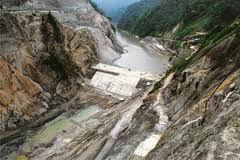
Water Woes of Central Asia By Dr Arvind Kumar In a recently released report on the situation in the Amu Darya Basin in Central Asia, the United Nations Environmental Program (UNEP) has criticized Central Asian governments for failing to agree on ways to cooperate on water management. The report warns that unless they can find a way to coordinate their effort, the future does not look bright for them. The Amu Darya -- known in the past as the Oxus -- has for most of its history been praised for its richness and fertility. The upper reaches of the Amu Darya form part of Afghanistan's northern border with Tajikistan. Elsewhere it marks part of the boundary between Uzbekistan and Turkmenistan. Originating from various water sources in Kyrgyzstan, Tajikistan, and Afghanistan, the Amu Darya flows northwest to its mouth on the southern shore of the Aral Sea. At 2,540 kilometers in length, the Amu Darya is the longest river in Central Asia. When the Soviets controlled the regio...
Glut vs. Starvation

Image
Glut vs. Starvation By Dr Arvind Kumar Media reports indicate that India is set to have a record cereal production of 241 million tonnes this year. However, this news raises more worries of safe storage and higher costs of stock maintenance than spreading cheer. Since storage capacity is limited, more food will rot in rain. For too long the government has sat over piles of food stocks, hoping to use them once the food bill is passed. Food mismanagement is a regular UPA feature. As a solution the government has allowed wheat exports. However, given the low prices in global markets, this will not help. High prices despite godowns overflowing with grains are intriguing and point to a possible nexus. A cartel of firms sells flour and allied products at a huge premium to the market price of wheat. Central and state governments, despite being hobbled by high food inflation, have abandoned their prime duty of building leak-proof supply chains, breaking cartels, checking middlemen a...

World Energy Balance

Image
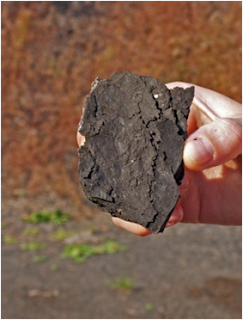
World Energy Balance By Dr Arvind Kumar World energy balance is likely to undergo a paradigm shift in the near future in view of rising natural gas production from shale formations. While dismissing the notion, recently debated in the U.S. media, that the shale gas revolution is a transitory occurrence, a new Baker Institute study, "Shale Gas and U.S. National Security," projects that U.S. shale production will more than quadruple by 2040 from 2010 levels of more than 10 billion cubic feet per day, reaching more than 50 percent of total U.S. natural gas production by the 2030s. Largely due to shale gas discoveries, estimated reserves of natural gas in the United States in 2008 were 35% higher than in 2006. Oil shale, an organic-rich fine-grained sedimentary rock, contains significant amounts of kerogen (a solid mixture of organic chemical compounds) from which liquid hydrocarbons called shale oil and/or natural g...

Climate Pollutants Threaten Human Rights

Image
Climate Pollutants Threaten Human Rights By Dr Arvind Kumar Recently, the Center for Human Rights and Environment (CEDHA) in Argentina and the Institute for Governance and Sustainable Development (IGSD) in Washington, D.C., have in a joint petition to the U.N. High Commissioner for Human Rights submitted that climate pollutant emissions violate human rights and require rapid reductions to protect the world’s most vulnerable people. According to the Joint submission, c limate pollutants and associated adverse impacts from a warming world violate basic human rights to life, health, water, food, equality before the law, effective judicial remedy, residence and movement, self determination, clean environment, and to be free from interference with one’s home. States have a mandatory obligation under international human rights law to adopt special measures to protect the fundamental rights of the inhabitants of the world’s most vulnerable regions from climate impacts. Romina Pico...

Tree Talk

Image
Tree Talk By Dr Arvind Kumar Sometimes small events organized in small places prove to be gigantic one in their scope and universal appeal. Recently, 38th series of popular environment programme 'Tree Talk' was organized in the Botanical Garden, Kashmir University. The event was organized to pay tribute to former HoD Botany Department and renowned Botanist late Prof P N Kachroo. The programme called ‘Tree Talk’ is designed to popularize environmental and ecological balance is becoming popular with the experts, academia and forest department functionaries who take part in the serious with increased enthusiasm. This is a healthy step and entails the potential to be of much utility if the concept is expanded to encompass more aspect of ecological protection. However, this programme is yet to make its mark even in Jammu where it originated. Viewed in a broad perspective, most of the urban areas in India are faced with ecological degradation on account of haphazard ex...

Ensuring Food Security

Image
Ensuring Food Security By Dr Arvind Kumar The first half of 2011 has witnessed global food prices soaring to a record high, raising concerns of new round of social unrest like that which spread through many regions of the world in 2008. From 2006 to 2008, average global prices for food staples soared, with rice jumping 217 percent, wheat 136 percent, corn 125 percent and soybeans 107 percent. Some experts argued that global population growth was to blame, while others pointed to dietary changes brought about by growing prosperity in developing countries, including an increase in the consumption of meat and processed foods. Still others blamed the increasing diversion of food crops to make bio-fuels or trade liberalization, which opened up developing countries to food imports from generously subsidized Western producers, negatively impacting local production. Whatever the cause, the result was mass unrest, with protests and riots breaking out in 30 countries in Asia, Africa and ...

GURU PURNIMA

Image
GURU PURNIMA On Auspicious Occasion of Guru Purnima let us pledge to keep our values and ethics intact. Evolve our selves through leadership and governance which are key drivers for societal change