Posts

Energy Security in Himalayan Nations
Image
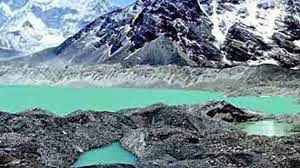
Energy Security in Himalayan Nations By Dr Arvind Kumar Known as the "roof of the world", the Himalayas face numerous challenges in addition to climate change. As mountain glaciers melt, wildlife poachers are running rampant, and forests are being cut down for timber or agriculture expansion. 
 As many communities depend on the region's natural resources to maintain their livelihoods and traditions, conservation is an important part of their lives. 
  But climate change is causing many Himalayan glaciers to retreat at a rapid pace, which could contribute to water shortages and have a major impact on freshwater flows. These changes would have a devastating impact on regional food security, the availability of energy resources and biodiversity.  Accordingly, some experts from Bangladesh, Bhutan, India and Nepal gathered in Kathmandu, Nepal for discussions on long-term energy security in the Himalayas, concluding a series of planning sessions that aim to put ...

Education for profit or Public Good?

Image
Education for profit or Public Good? The mushroom growth of private institutions of higher education in India has given rise to question whether such institutions are money spinning machines or serving public interest. In the absence of any reliable data it is difficult to find any answer to this question for the time being. However, a recent article published in Japan Times by Hiroaki Sato depicts a sordid state of affairs in private educational institutions in the United States. While lamenting that American insistence on free-market notions has brought the matter to the other extreme in higher education, Sato asserts that it has spawned education profiteers. Worse, many of these colleges get most of their ‘revenues’ from the government. According to a report published by US Government Accountability Office (GAO), most these private educational institutions encourage fraud and pursue the "deceptive and questionable marketing practices." The US Department of Educatio...

Will BRICS Bank Transform Regional Development

Image
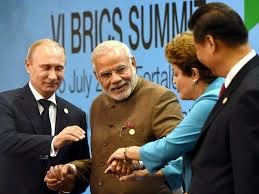
Will BRICS Bank Transform Regional Development We believe the BRICS are an important force for incremental change and reform of current institutions towards more representative and equitable governance, capable of generating more inclusive global growth and fostering a stable, peaceful and prosperous world. BRICS has a new confidence, and it was more than apparent at the summit. The only world grouping that is not region, security or trade-based, its members have come together with the determination to create a more multilateral global order. China and Russia have backed the other three BRICS members on the issue of UN reform and Security Council expansion. But the grouping needs to find a stronger political voice in new world order. As its name implies, the agreement for the New Development Bank, signed by Brazil, Russia, India, China and South Africa at their sixth BRICS summit in Brazil, signals the start of a new global financial order that aims to be more inclusive th...

'Namami Gange'

Image
'Namami Gange' The allocation of a fund of Rs 2,037 crore  by the Finance Minister Arun Jaitley in his first budget is a welcome move, especially when it constitutes the part of an integrated Ganga development project called the 'Namami Gange'. It is equally interesting to know that Rs 100 crore and Rs 4200 crore have been allocated for Ghat development & beautification of the river front and for National water ways respectively. Undoubtedly these are laudable measures; nevertheless it calls for an integrated approach because multiple agencies would be working at different points sans coordination and cooperation in the absence of convergence enhancing the probability of ‘too many cooks spoiling the broth’. Emphasis should be on convergence and capacity building.   It is noteworthy that no action plan of this magnitude can succeed without the involvement of the people as major stakeholders. Besides, it is equally essential to initiate c...

World Solar Day 2014

Image
World Solar Day 2014 The World Solar Day is being held nationally in the Canada, the U.S. and UK on Saturday, June 18 and in Australia on November 19 with events by cities, non-profits, companies and the solar industry. The objective of observing the Solar Day is to encourage public participation and awareness of how solar energy can reduce monthly energy bills - while providing much-needed "green" jobs for the economy. Growing from one event for Solar Day 2009 - a bio-diesel buses tour of solar homes and businesses hosted by the City of San Francisco – Solar Day in 2010 grew to events hosted by cities and the solar industry in 26 U.S. cities. Multiple cities issued proclamations declaring an Official Solar Day for their city events. Buying a solar installation costing some million rupees for a home or business is one time investment and perhaps the ultimate economic commitment for both a green lifestyle and working environment. Solar can be thought of as the next...

Raising Sardar Sarovar Dam Height Boon or Bane?

Image
Raising Sardar Sarovar Dam Height Boon or Bane? The Central Government’s recent decision to allow the Gujarat government to raise by about 17 meters from 121.9 to 138.7 meters the height of Sardar Sarovar has met with mixed reactions. The official viewpoints looks at the proposed move from the benefits accruing in terms of augmentation in electricity generation and availability of additional water for irrigation and drinking purposes, the activists contend that raising the dam's height will displace an additional 2.5 lakh people. When we talk of sustainable environment and development to provide basic amenities to billions of people we have to take calculated risks, while adopting pre-emptive measures to look after the interests of the affected segments of the society on equitable basis. While working on the maxim of “benefits for the majority not at the expense of loss to minority; but equitable sharing of benefits and loss for all”, all development plans can yield d...

Climate Change & Rivers

Image
Climate Change & Rivers According to a recent study, soaring temperatures and erratic rains brought on by a changing climate may radically alter water flows in the world’s major river basins, forcing people to give up farming in some areas. The study – part of a five-year research project on four continents, the first to take a close look at 10 river basins - is based on data from 17 climate models used by the Intergovernmental Panel on Climate Change (IPCC) to examine the potential effect of changing temperatures and rainfall patterns on the water flows in rivers from now until 2050. Mark Mulligan, a leading author of the study, has opined that climate models cannot predict how rainfall patterns will behave in future with a high degree of certainty: “What we do know is that we cannot be confident about hydrological stability. Some rivers could become wetter and then drier, or vice versa. The key message to countries is: ‘Become more adaptable’.” The study expects that ...